In short
- When is whale season in Loreto?
- Blue whales and gray whales are in the area from January to March, with February the most reliable month for both.
- How long is a whale watching tour?
- About five hours, including the boat ride out, time with the whales, food and drinks.
The best time for whale watching in Loreto is generally January through March, particularly if you want to see blue whales. February is a good month to consider within this window, but whale arrivals, locations and sightings vary each year. Check recent local sightings before booking travel specifically for whales.
Located in Baja California Sur, Mexico, Loreto is a gateway to the Sea of Cortez and Bahía de Loreto National Park. Here, whale watching combines the chance to see the largest animal on Earth with a landscape of islands, open water and desert mountains.
This guide explains when to visit, which whales you may encounter and how to plan your trip.
When Is Whale Watching Season in Loreto?
January through March is the main planning window for blue whale watching in Loreto. Mexico’s protected-area authority, CONANP, has documented blue whales in the park during these months.
However, the usual wildlife season is not a fixed arrival and departure schedule. Food availability and whale movements affect where animals are found and how long they remain.
Authorized whale watching dates are also set by area and season. Always confirm available departures for your travel dates.
December and Early January: Check Before Planning Around Blue Whales
An early-winter visit may offer marine wildlife encounters, but you should not assume that blue whales have arrived.
If whale watching is the main purpose of your holiday, ask about recent observations and whether dedicated trips are operating before booking.
Mid-January and February: A Useful Blue Whale Planning Window
Mid-January through February is a useful period to consider for a whale-focused visit to Loreto.
Reserve your preferred dates once your travel plans are confirmed, and leave some flexibility in your itinerary. Whale presence and weather can change, even during the main season.
March: Whale Watching May Continue
Blue whales and other cetaceans may still be present in March, making it another month to consider.
Their departure dates vary between years. For a trip later in March, recent local reports are especially useful when deciding whether to plan around blue whales.
April: Confirm Sightings and Tour Availability
Whale sightings may continue into April in some years, but do not assume that the winter experience or dedicated departures will still be available.
Confirm recent activity, authorized operating dates and tour availability before making reservations.
May to November: Explore More of Loreto
May through November falls outside the main winter blue whale planning window.
If you visit during these months, consider island excursions, snorkeling and other adventures rather than building your entire itinerary around whale watching. Marine wildlife encounters can still happen, but they should be treated as a possibility rather than a promise.
Planning a winter visit? Explore Aventuras Tours’ Loreto whale watching trip and enquire about availability for your dates.
Why Choose Loreto for Whale Watching in Baja?
The best place for whale watching in Baja depends on which species you hope to see.
Loreto is particularly associated with blue whales in the Sea of Cortez. Pacific-side destinations such as Magdalena Bay and San Ignacio Lagoon are better known for gray whale watching.
These are different wildlife experiences. Choosing your destination around the species you most want to encounter helps you plan a more rewarding trip.
Bahía de Loreto National Park protects a marine and island landscape that supports a wide variety of wildlife. CONANP identifies blue whales, fin whales, humpback whales, orcas and dolphins among the cetaceans found here.
Loreto also offers ways to explore beyond a single boat departure. Combining whale watching with island trips or guided land adventures gives you more flexibility when weather changes your plans.
Which Whales Can You See in Loreto?
Blue Whales: Loreto’s Signature Whale Watching Experience
Blue whales are the main reason many travelers plan a winter visit to Loreto.
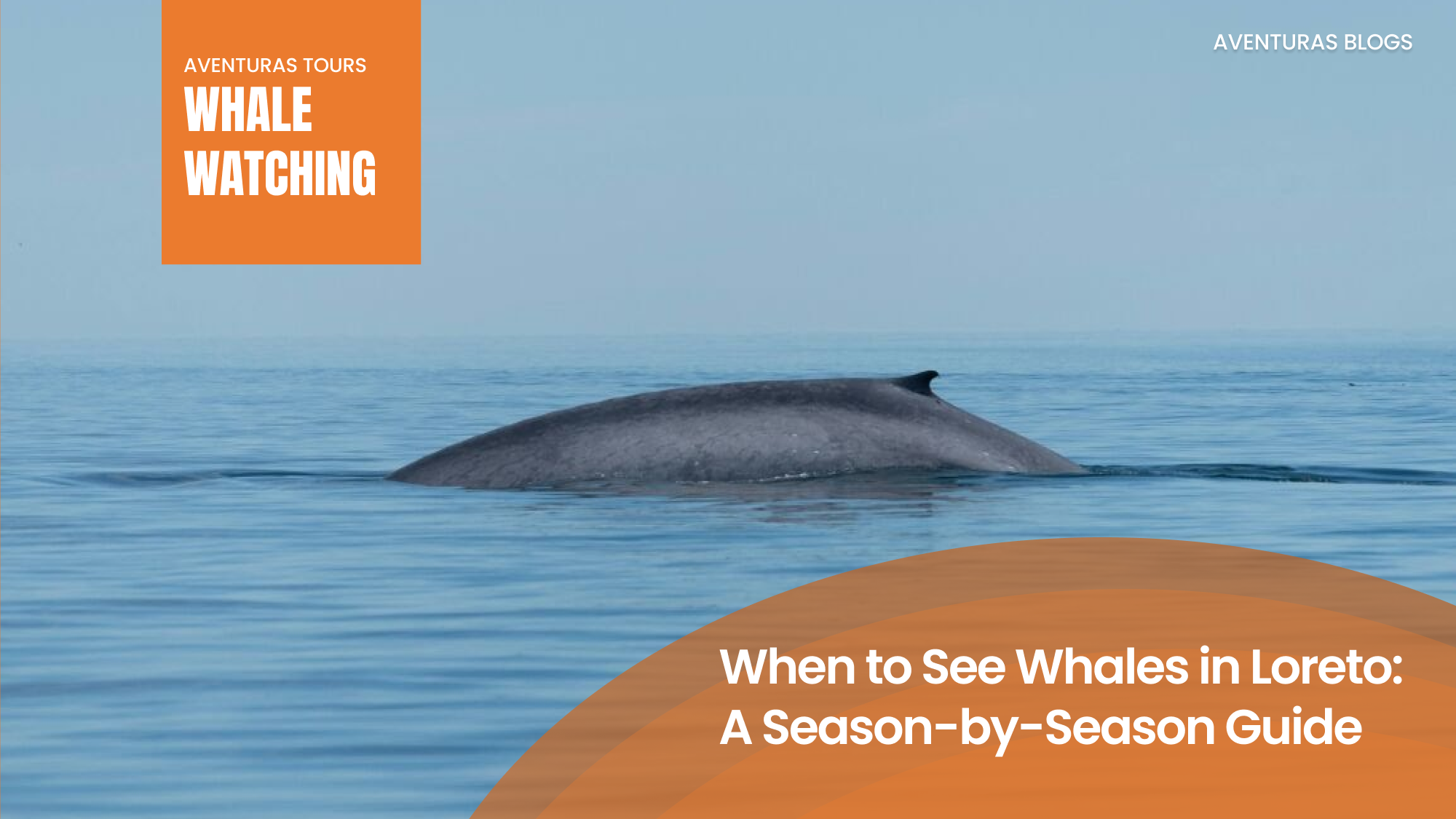
Look for a long body, mottled blue-gray coloring and a small dorsal fin positioned far back. A blow above the surface may be your first indication that a whale is nearby.
Watching blue whales often involves observing from a respectful distance and waiting between surfacings. The experience can be quiet and unhurried, with brief views of an enormous animal moving through its natural habitat.
Their presence and behavior cannot be guaranteed on any departure.
Fin Whales
Fin whales, also called finback whales, are another species found in Loreto’s waters.
Their streamlined bodies and more prominent dorsal fins can help distinguish them from blue whales. They are a possible part of a whale watching outing, but no particular combination of species should be expected.
Humpback Whales
Humpback whales also occur in Bahía de Loreto National Park.
Their long pectoral fins and distinctive body shape make them recognizable. Breaching and tail-slapping are possible, but these behaviors do not happen on every outing.
A whale swimming quietly at the surface is just as much a wildlife encounter as one making a dramatic breach.
Orcas
Orcas can occur in Loreto’s waters, but sightings should be treated as occasional encounters.
Do not choose a winter departure expecting to see orcas. Their movements are variable, and this guide does not present a dependable local orca season.
Are There Gray Whales in Loreto?
Loreto Bay is not the usual destination for travelers specifically seeking gray whales.
For gray whale watching, consider Baja’s Pacific-side lagoons, including Magdalena Bay and San Ignacio Lagoon.
Magdalena Bay is a separate destination across the peninsula. It requires its own transport and tour arrangements and is not part of a standard Loreto Bay whale watching outing.
What Is a Whale Watching Trip in Loreto Like?
Whale watching is a search for wildlife. The route depends on recent observations, whale movements and sea conditions.
Some encounters happen relatively quickly. Others involve more time scanning the water and waiting for animals to surface.
A blow on the horizon may be the first sign of a whale. Your guide may then identify its direction of travel and position the boat for observation while respecting applicable distances and the animal’s movement.
Before booking, confirm:
- The departure point and expected duration.
- Whether the trip is shared or private.
- The maximum number of passengers.
- What food, drinks and equipment are included.
- Whether protected-area fees are included.
- The policy for weather cancellations and changes.
- Any suitability questions for children or passengers with mobility needs.
These details help you choose an outing that fits your group and expectations.
How to Plan Your Whale Watching Trip in Loreto
Book Ahead and Leave Room for Weather
Once you know your travel dates, enquire about available departures.
If seeing whales is a priority, avoid leaving your outing until the final morning of your stay. A spare day gives you flexibility if wind or sea conditions prevent a departure.
It may also give you the option of a second outing, subject to availability.
Ask About Recent Sightings
A seasonal guide helps you plan months ahead. As your trip approaches, current local information becomes more useful.
Ask which species have been observed recently and whether whale watching trips are operating.
Recent sightings help set expectations, but they do not guarantee the next encounter.
Pack for Sun, Wind and Boat Movement
Bring:
- A light windproof jacket and comfortable layers.
- Sun protection and sunglasses.
- A hat that stays secure in the wind.
- Binoculars, if you have them.
- A camera with a zoom lens for photographs from a distance.
- Protection for your phone or camera against splashes.
If you are prone to motion sickness, plan ahead with advice from a pharmacist or healthcare professional.
Choose Responsible Whale Watching
Choose an authorized operator that respects whale behavior and applicable observation rules.
Mexico’s NOM-131-SEMARNAT-2010 sets minimum observation distances according to whale species and vessel size. For blue whales and fin whales, the specified distances are 100 meters for smaller vessels and 120 meters for medium or larger vessels.
Responsible observation also means avoiding pursuit, blocked travel paths and pressure to approach more closely for photographs.
Follow your guide’s instructions and any applicable local restrictions throughout the outing.
Plan Your Loreto Adventure With Aventuras Tours
Aventuras Tours offers whale watching in Loreto alongside island trips and guided land adventures in Baja California Sur.
Start by sharing your travel dates and the species you most hope to see. Ask about the available trip, current seasonal conditions and how the outing fits into the rest of your stay.
You can also combine your time on the water with an island excursion or a guided UTV adventure, giving you more than one way to explore Loreto.
View our Loreto whale watching tour and enquire about your dates.
Frequently Asked Questions About Whale Watching in Loreto
What Is the Best Month to See Blue Whales in Loreto?
February is a good month to consider within the broader January–March planning window. There is no universally best week: arrivals and departures vary between seasons. Check recent local reports before finalizing a whale-focused trip.
Can You See Whales in Loreto in March?
Yes, blue whales and other species may be present in March. Their presence can change during the month and between years. Confirm recent sightings and available departures before booking.
Is Whale Watching Available All Year in Loreto?
Do not assume dedicated whale watching trips are available year-round. Winter and early spring are the main planning periods for blue whale outings. Other marine excursions may be available outside that window.
Are Whale Sightings Guaranteed?
No. Whale watching takes place in a natural environment. Food availability, whale movements, season and weather affect encounters. No particular species or behavior can be guaranteed.
Is Loreto or Magdalena Bay Better for Whale Watching?
Choose Loreto if your main interest is blue whales in the Sea of Cortez. Consider Magdalena Bay if gray whales are your priority. The right choice depends on the wildlife experience you want and the timing of your visit.
Can Wind Cancel a Whale Watching Trip?
Yes. Wind and sea conditions can prevent a departure. Check the operator’s weather policy before booking and allow flexibility in your itinerary.
How Close Can Boats Get to Blue Whales?
Under Mexico’s NOM-131-SEMARNAT-2010, minimum observation distances for blue whales are 100 meters for smaller vessels and 120 meters for medium or larger vessels. Applicable local restrictions and your guide’s instructions must also be respected.
Can You Swim With Blue Whales on a Loreto Whale Watching Tour?
A whale watching tour is a boat-based observation experience. Do not book it expecting to enter the water with blue whales. Follow your guide’s instructions and protected-area rules.